


Most American families trust laptops for everyday learning and entertainment, yet growing concern surrounds the invisible energy they emit. With over 70 percent of North American households relying heavily on connected devices, health-conscious parents are right to question laptop EMF radiation myths and realities. This overview breaks down the science, highlights common misconceptions, and presents practical strategies that help safeguard your children’s well-being with evidence-based solutions.
Table of Contents
- Defining Laptop EMF Radiation And Common Myths
- Types Of EMF Emitted By Laptops Explained
- How Laptop EMF Interacts With The Human Body
- Potential Health Risks For Children And Families
- Proven Strategies For Reducing Laptop EMF Exposure
- Testing, Evidence, And Protection Products Overview
Key Takeaways
| Point | Details |
|---|---|
| EMF Radiation Types | Laptops emit two primary types of EMF: Extremely Low Frequency (ELF) and Radiofrequency (RF), both of which remain within safety parameters. However the safety parameters haven't changed since 1996. Many critics say they needed to be reviewed and updated. |
| Myth vs. Reality | There is a common belief that non-ionising radiation (which is what is emitted by laptops) is harmless because of its low heat emision. However, many animal studies disprove this. Animals are shown to develop adverse effects when exposed to man-made electromagnetic field radiation. It follows that something other than heat is affecting animals. |
| Vulnerable Populations | Children may be more susceptible to EMF exposure due to their developing bodies, highlighting the need for precautions. |
| Mitigation Strategies | Practical steps to reduce EMF exposure include using wired connections and maintaining distance from devices during use. |
Defining Laptop EMF Radiation and Common Myths
Electromagnetic fields (EMFs) represent invisible energy areas surrounding electrical devices that generate concern among many health-conscious families. Understanding laptop EMF radiation requires separating scientific fact from widespread misconception. These energy fields emerge from electronic devices like laptops through electrical currents and wireless signals, generating low-level non-ionizing radiation.
Contrary to popular belief, not all radiation poses equal health risks. Most laptop EMF emissions belong to the non-ionizing category, which means they carry substantially lower energy levels compared to dangerous ionizing radiation like X-rays or gamma rays. Scientific research indicates that typical laptop usage produces electromagnetic fields well within established safety parameters. The EMF-Portal systematic research compilation confirms that most personal computing devices generate low-intensity fields that do not breach international exposure guidelines.
Common myths surrounding laptop EMF radiation often stem from misunderstandings about radiation types and potential biological interactions. Many people incorrectly assume that any radiation automatically implies severe health consequences, when in reality, the electromagnetic spectrum contains numerous benign energy forms. Wireless signals, power frequencies, and electrical currents produce non-harmful radiation that does not fundamentally alter cellular structures or DNA.
Pro tip: Minimize potential EMF exposure by maintaining a reasonable distance from your laptop and using external peripherals like wired keyboards and mice.
Types of EMF Emitted by Laptops Explained
Laptops generate multiple types of electromagnetic fields (EMFs) through various internal components and wireless technologies. Electromagnetic radiation sources within laptops can be categorized into two primary classifications: extremely low frequency (ELF) and radiofrequency (RF) emissions. These energy fields emerge from different laptop components, each producing unique electromagnetic characteristics that contribute to overall device radiation.
Extremely low frequency (ELF) EMFs predominantly originate from power supply units, internal electrical circuits, and battery systems. These low-energy fields are generated by electrical currents flowing through laptop components, producing minimal electromagnetic radiation. Radiofrequency (RF) emissions, in contrast, stem from wireless communication modules like Wi-Fi and Bluetooth antennae, which transmit and receive signals across different frequencies. The EMF-Portal research compilation highlights that field strengths vary significantly depending on device distance, operational intensity, and specific hardware configurations.
Understanding the nuanced landscape of laptop EMF emissions helps demystify potential health concerns. Different laptop components contribute distinctly to electromagnetic radiation, with solid-state drives (SSDs) producing substantially less magnetic field radiation compared to traditional hard disk drives (HDDs). Wireless communication modules generate the most noticeable radiofrequency emissions, though these remain within internationally recognized safety parameters for non-ionizing radiation.
Pro tip: Consider using wired peripherals and maintaining distance from your laptop to minimize direct electromagnetic field exposure.
Here’s a quick overview of the main types of EMF emitted by laptops and how they differ:
| EMF Type | Main Source in Laptop | Frequency Range | Typical Effects |
|---|---|---|---|
| ELF (Extremely Low Frequency) | Power supply, battery, circuits | 3 Hz – 3 kHz | Weak magnetic fields, minimal biological impact |
| RF (Radiofrequency) | Wi-Fi, Bluetooth, wireless cards | 30 kHz – 300 GHz | Wireless connectivity, potential minor absorption by tissues |
| Static Magnetic | Hard drives and fans | 0 Hz (static) | No known health effects with brief exposure |
| Electric Field | Power adapter, screen | Varies | Minimal exposure, mostly near charger/cables |
How Laptop EMF Interacts With the Human Body
The human body experiences electromagnetic fields (EMFs) through complex cellular interactions that extend beyond simple physical exposure. Cellular electromagnetic responses involve intricate biological mechanisms where non-ionizing radiation from laptops can potentially influence cellular function without directly damaging DNA structures. These interactions primarily occur at the molecular level, triggering subtle physiological changes that researchers continue to investigate.

Electromagnetic fields impact human biology through several potential pathways, including calcium channel dysregulation, oxidative stress mechanisms, and potential alterations in neurological signaling. The body absorbs low-level electromagnetic radiation differently across various tissue types, with EMF health effects demonstrating nuanced interactions between technological emissions and biological systems. Prolonged exposure may influence melatonin production, potentially disrupting natural sleep cycles and immune system functioning.
Scientific understanding of laptop EMF interactions remains evolving, with researchers acknowledging that while immediate thermal damage is unlikely, subtle biological responses warrant continued investigation. The body’s response depends on multiple factors including exposure duration, frequency intensity, and individual physiological characteristics. Most current evidence suggests that typical laptop EMF exposure remains within internationally recognized safety parameters, though long-term comprehensive studies are still necessary to definitively establish potential health implications.
Pro tip: Minimize potential electromagnetic exposure by using external keyboards, maintaining physical distance from your laptop, and taking regular breaks during extended computing sessions.
Potential Health Risks for Children and Families
Children represent a uniquely vulnerable population when it comes to electromagnetic field (EMF) exposure from laptops and wireless devices. Pediatric EMF sensitivity stems from their developing nervous systems, which are inherently more susceptible to potential environmental electromagnetic interactions. Young bodies have thinner skulls and smaller physical structures, which may potentially increase their absorption of electromagnetic radiation compared to adults.
Research indicates that while conclusive long-term evidence remains limited, precautionary approaches are recommended for families. The International Agency for Research on Cancer (IARC) has classified electromagnetic fields as a Group 2B possible carcinogen, signaling the need for careful consideration. Pediatric health research suggests that children’s developing physiological systems might be more sensitive to potential electromagnetic influences, particularly regarding neurological and developmental parameters.
Despite ongoing scientific debate, health-conscious families are advised to adopt pragmatic protective strategies. Current scientific understanding suggests that while immediate risks might be minimal, the cumulative and long-term effects of persistent EMF exposure remain uncertain. This uncertainty underscores the importance of implementing reasonable precautionary measures to minimize potential electromagnetic radiation exposure for children, such as limiting device proximity and duration of use.
Pro tip: Create technology-free zones in your home and establish clear guidelines for device usage to help reduce children’s cumulative electromagnetic exposure.
Proven Strategies for Reducing Laptop EMF Exposure
Reducing electromagnetic field (EMF) exposure requires a strategic and proactive approach to your digital environment. Low-EMF workstation design involves implementing practical techniques that minimize potential radiation interactions. The fundamental principle is creating physical distance between your body and electromagnetic sources, which can significantly decrease potential exposure risks.
Practical strategies for minimizing laptop EMF exposure include prioritizing wired connections over wireless technologies. This means using ethernet cables instead of Wi-Fi when possible, positioning your laptop on a desk rather than directly on your body, and maintaining substantial distance from wireless routers and other electromagnetic-generating devices. Electromagnetic risk reduction emphasizes the importance of creating intentional spaces that limit continuous radiation exposure, particularly for children and sensitive individuals.
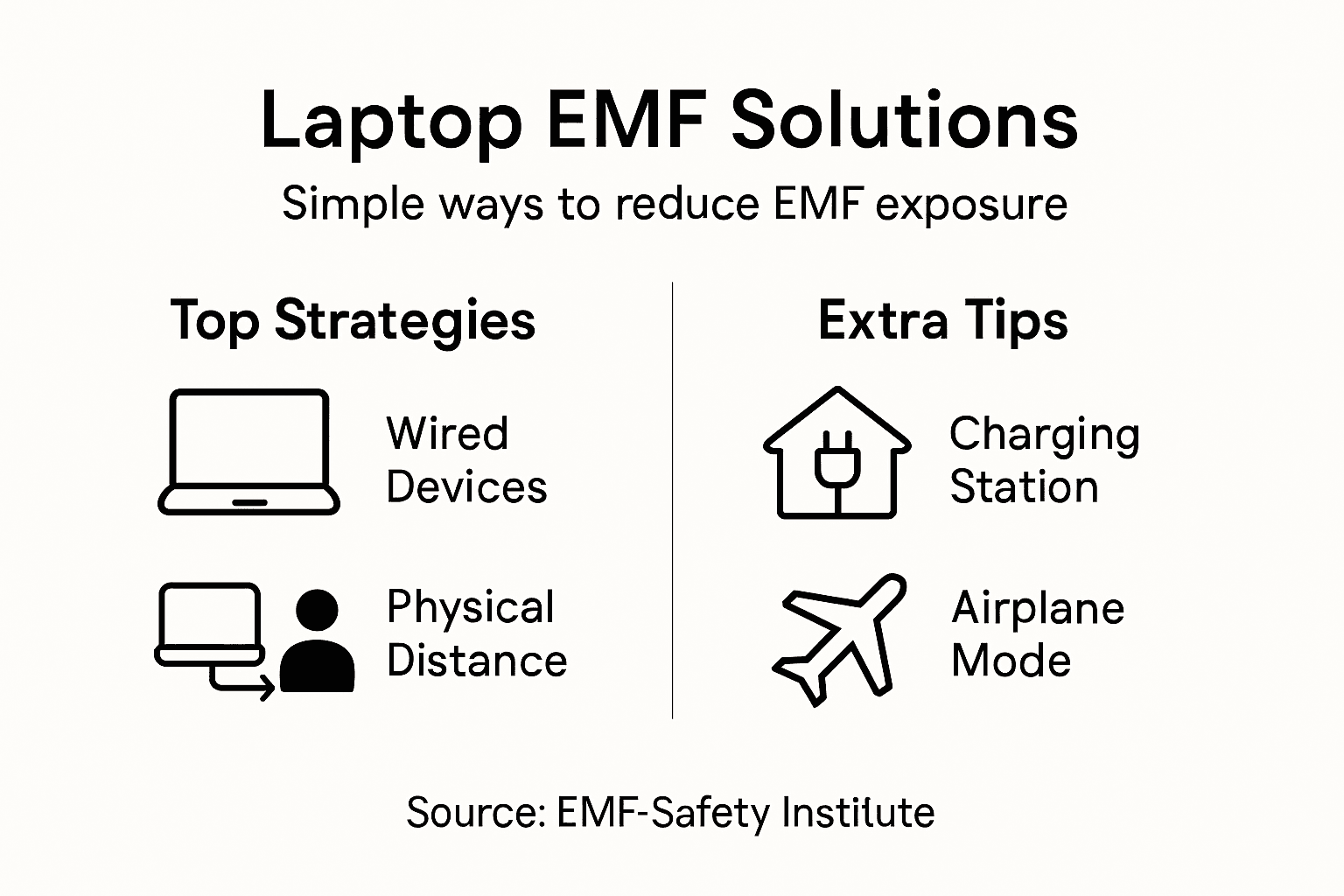
Additional protective measures involve managing device usage patterns and environmental configurations. Recommendations include turning off wireless functions when not in use, using external keyboards and mice to increase physical distance, avoiding device charging near sleeping areas, and implementing regular breaks from electronic devices. These strategies collectively work to minimize cumulative electromagnetic radiation exposure and support a more health-conscious technological lifestyle.
Pro tip: Create a dedicated charging station away from living spaces and use airplane mode during periods of non-essential connectivity to reduce unnecessary electromagnetic radiation.
Compare these strategies for limiting laptop EMF exposure and their effectiveness:
| Strategy | How It Works | Involved Effort | Expected Exposure Reduction |
|---|---|---|---|
| Wired peripherals | Increases distance from laptop | Low | Moderate to high |
| Use Ethernet instead of Wi-Fi | Reduces RF emissions | Medium | High |
| Keep laptop off lap | Less body proximity to EMF | Low | Moderate |
| Turn off wireless when not needed | Minimizes RF signals | Very low | High |
| Regular breaks from devices | Lowers cumulative exposure | Medium | Moderate |
Testing, Evidence, and Protection Products Overview
The landscape of electromagnetic field (EMF) research encompasses an extensive and evolving scientific domain. Comprehensive EMF research databases have cataloged over 48,000 publications exploring potential biological interactions, revealing a complex scientific dialogue about electromagnetic exposure and its potential health implications. These research efforts span multiple methodological approaches, including in vitro experiments, epidemiological studies, and sophisticated biophysical modeling.
Protective strategies against electromagnetic radiation continue to develop, with researchers critically evaluating various intervention technologies. Scientific institutions emphasize the importance of evidence-based solutions over commercial claims, focusing on rigorously tested approaches that demonstrate measurable effectiveness. Electromagnetic risk assessment projects are developing comprehensive guidelines to help consumers make informed decisions about potential protective measures, highlighting the need for scientifically validated interventions.
The current scientific consensus suggests that while definitive long-term effects remain under investigation, proactive and prudent approaches to EMF exposure are recommended. Protection products range from specialized shielding fabrics to harmonizing devices, each requiring careful scientific scrutiny. Consumers are advised to approach EMF protection with a critical eye, prioritizing solutions backed by credible research and demonstrable scientific validation.
Pro tip: Always request independent third-party testing results when evaluating electromagnetic protection products to ensure their claimed effectiveness.
Protect Your Family From Laptop EMF Radiation Today
The article highlights common concerns about electromagnetic fields (EMFs) emitted by laptops, especially their subtle biological effects on children and adults. You want to minimize exposure to ELF and RF radiation coming from your devices while maintaining your family’s health and well-being. Understanding key concepts like “EMF sensitivity” and the importance of distance is critical for creating safer home environments.
Take control now by exploring effective solutions designed specifically for wireless and laptop EMF protection. Our EMF Radiation Protection for Cell Phone, iPhone, and Laptop – Omnia Radiation Balancer products have been tested to reduce harmful exposure while boosting your body’s natural resilience. Experience proven benefits on heart, blood, and body strength tested in real conditions.

Do not wait to reduce the invisible risks around you. Visit All Omnia Products – Omnia Radiation Balancer and choose the right protection for your home and family. For flexible gifting options, see Omnia Gift Cards – Omnia Radiation Balancer. Start your journey to EMF safety right now at Omnia Radiation Balancer.
Frequently Asked Questions
What is laptop EMF radiation and what types does it emit?
Laptop EMF radiation refers to the electromagnetic fields generated by laptops through their electrical currents and wireless signals. The main types emitted are extremely low frequency (ELF) and radiofrequency (RF) emissions. ELF comes from power supply and internal circuits, while RF is produced by Wi-Fi and Bluetooth communications.
Are there health risks associated with laptop EMF radiation for children?
Yes, children may be more vulnerable to laptop EMF radiation due to their developing nervous systems. While conclusive long-term studies are still needed, families are encouraged to implement precautionary measures to minimize exposure, especially for young children.
How can I minimize EMF exposure while using my laptop?
To reduce EMF exposure, consider using wired peripherals instead of wireless, keeping the laptop off your lap, turning off wireless functions when not in use, and taking regular breaks during prolonged use. Creating distance from the laptop can significantly decrease exposure risks.
What are some effective protective products against laptop EMF radiation?
While various protective products are available, it is crucial to opt for those backed by scientific research. Options may include shielding fabrics or devices, but always request independent testing results to validate their effectiveness.
Recommended
- Is Your Laptop Giving Off Microwave Radiation? – Omnia Radiation Balancer
- Master Laptop Radiation Protection for Your Family’s Health – Omnia Radiation Balancer
- Common EMF-Producing Devices: Understanding EMF Sources – Omnia Radiation Balancer
- Top Benefits of EMF Protection for Health-Conscious Parents 2025 – Omnia Radiation Balancer
Share and get 15% off!
Simply share this product on one of the following social networks and you will unlock 15% off!